Discover how Seed Audio 1.0 is redefining what's possible with AI voice generation — and why traditional text-to-speech tools are becoming relics of the past.
Discover how Seed Audio 1.0 is redefining what's possible with AI voice generation — and why traditional text-to-speech tools are becoming relics of the past.
The End of an Era: When TTS Was Enough
For decades, text-to-speech technology served us well. The formula was straightforward: type your script, click generate, receive a spoken audio file. Early TTS systems were robotic and monotone, but recent advances brought natural-sounding voices, emotion control, voice cloning, and multilingual support.
Traditional TTS answered one question beautifully: "How does this text sound when spoken aloud?"
But here's the problem — that's rarely the question creators actually need answered.
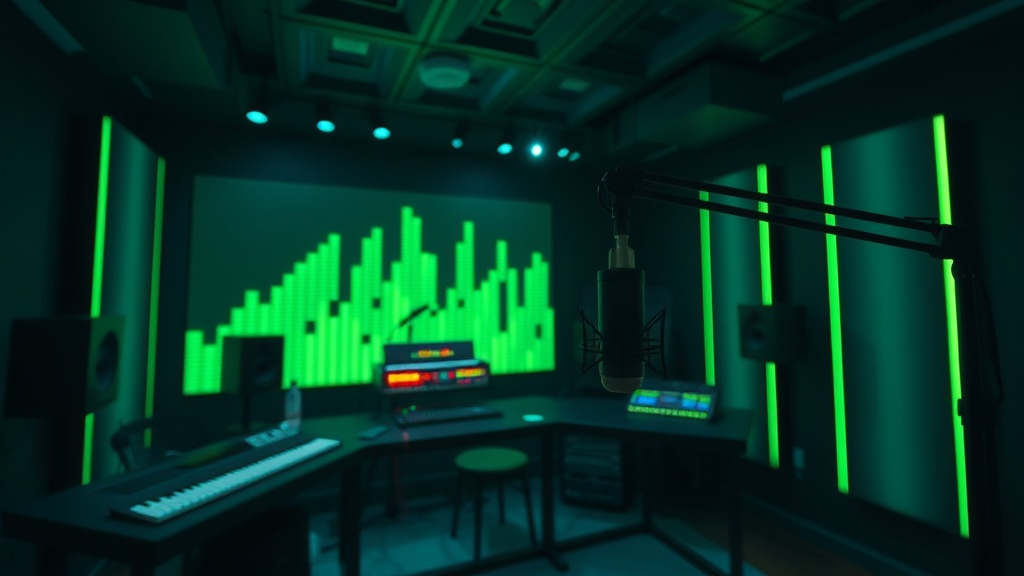
When a podcaster sits down to create an intro, they don't just want a voice reading their script. They want the energy, the music, the timing, the room tone, and the seamless transitions that make listeners feel something. When a game developer needs NPC dialogue, they need voices that match the environment, sound effects that punctuate key moments, and atmospheric audio that immerses players in the world.
Traditional TTS gives you a voice. Modern creators need an entire audio scene.
Enter Seed Audio: The Paradigm Shift
Seed Audio 1.0, developed by ByteDance's Seed research group, represents a fundamental rethinking of what AI voice generation should be. Instead of treating voice as an isolated output, Seed Audio treats it as one layer in a complete audio composition.
The core difference is philosophical. Traditional TTS asks "What does this text sound like?" while Seed Audio asks "What does this scene sound like?" This shift from voice generation to scene generation changes everything about how creators work.
Imagine describing "two characters arguing in a rainy alley" to each system. Traditional TTS would generate one voice reading the dialogue. Seed Audio creates the entire soundscape: the rain, the echoing footsteps, the emotional tension in each character's voice, the timing of interruptions, and the atmospheric mood — all generated as one coherent audio piece.
Head-to-Head: The Technical Comparison
This difference isn't an incremental improvement — it's a paradigm shift. Let's look at how it manifests across key dimensions.
In terms of output scope, traditional TTS generates a single voice track, requiring separate tools for music, effects, and ambience, followed by manual mixing and alignment after generation, all requiring multiple software licenses and workflows. Seed Audio 1.0, by contrast, generates complete audio scenes in one pass — dialogue, music, sound effects, and ambience integrated together as end-to-end output ready for use, requiring just one prompt, one generation, one file. The practical impact is striking: a task that traditionally required 4-5 tools and hours of assembly now takes one prompt and seconds of generation.
Multi-character handling reveals perhaps the most dramatic difference. Traditional TTS can only handle one voice per generation, requiring multiple calls for dialogue scenes, with voice consistency demanding careful manual management and character switching that's manual and error-prone. Seed Audio 1.0 handles multiple characters in a single generation with automatic speaker alternation and timing, maintaining voice consistency across extensions while delivering natural dialogue flow with emotional continuity. An audiobook chapter with three characters that once required three separate recordings and hours of editing can now be generated as one cohesive scene.
Contextual understanding shows another fundamental divergence. Traditional TTS reads text literally with limited understanding of scene context, requiring emotions to be explicitly tagged or prompted, with no awareness of surrounding audio elements. Seed Audio 1.0 understands scene descriptions and creative intent, generating contextually appropriate soundscapes, inferring emotion from narrative context, and automatically balancing dialogue with environmental audio. Instead of manually specifying "sad voice" and "rain sounds," you describe "a character grieving in a storm" and the model understands the full emotional and sonic context.
Real-World Scenarios: The Difference in Practice
Let me illustrate this difference with concrete examples.
Consider podcast intro creation. Using traditional TTS, you'd need to generate the host voice reading the intro script, search through royalty-free music libraries for a suitable track, download 5-10 options and test each, find transition sound effects, open an audio editor to manually align voice, music, and effects, adjust timing so the music crescendo matches voice energy, add room tone to prevent awkward silence, then export, listen, revise timing, and re-export. The entire process takes 1-3 hours. With Seed Audio 1.0, you simply input a prompt like "energetic podcast intro with confident male host, upbeat electronic music bed, subtle transition swooshes, clean ending with sonic logo," generate, listen, and adjust the prompt if needed. The entire process takes 5-15 minutes.
For audiobook character scenes, traditional TTS requires generating each character's lines separately, recording narrator voice for scene-setting, finding or creating ambient sounds, importing all tracks into an editor, manually arranging dialogue sequence, adding pauses and timing between speakers, layering ambient sounds underneath, ensuring voice levels are consistent, and exporting the chapter section. Each scene takes 2-5 hours. Seed Audio 1.0 simply requires describing the scene: "fantasy tavern scene with three characters — gruff dwarf warrior, nervous young elf, wise old human innkeeper. Warm fire crackling, distant crowd noise, tankard sounds. Tense negotiation over a map." After generating and fine-tuning the prompt for character balance, the entire process takes 10-30 minutes.
Video game NPC dialogue presents similar contrasts. Traditional TTS requires generating each NPC line individually, creating variations for different emotional states, sourcing environmental audio for each location, manually creating dialogue trees with proper timing, testing in the game engine, and adjusting based on player feedback. Each character takes days. Seed Audio 1.0 can batch-generate variations and integrate directly into the game engine, reducing each character to hours of work.
The Voice Cloning Revolution
Voice cloning represents one of Seed Audio's most powerful advantages. Traditional TTS voice cloning requires extensive training data, often hours of audio, with quality varying significantly across different speaking styles, emotional range limited, consistency degrading over long content, and each new voice requiring separate training.
Seed Audio voice cloning, by contrast, accepts up to 3 reference clips of roughly 30 seconds each, using zero-shot cloning technology that requires no training, maintains voice identity across different emotions, stays consistent across long-form generation, and allows the same voice to be used across multiple projects instantly. The practical impact is profound: a brand can record their spokesperson once, use those 90 seconds of reference audio, and generate unlimited content while maintaining perfect voice consistency.
What Traditional TTS Still Does Well
To be fair, traditional TTS retains some advantages. If you genuinely just need a voice reading text with no additional audio elements, traditional TTS is simpler and often faster. When exact script fidelity is critical, such as for legal disclaimers or technical instructions, traditional TTS's literal approach is an advantage. Basic TTS tools are often cheaper and require less computational resources for simple tasks. And many teams have established TTS workflows that work well for their specific needs.
However, for any task requiring audio production beyond basic voiceover, Seed Audio's integrated approach is objectively more efficient.
The Technical Foundation Behind the Magic
Seed Audio's capabilities aren't magic — they're built on ByteDance's extensive research foundation. Seed-TTS provides advanced zero-shot voice cloning, emotion controllability, and speaker identity separation. Seed-Music contributes controllable music generation, ensuring background audio supports rather than competes with dialogue. Seedance 2.0's experience informs the approach to integrated scene creation. The multimodal architecture enables the model to process text instructions and reference audio simultaneously, understanding both what to say and how it should sound in context.
This research foundation means Seed Audio isn't just a TTS tool with extra features — it's a purpose-built audio scene generation system.
The Creator's Dilemma: Which Should You Choose?
Choose traditional TTS when you need simple voiceover with no additional audio elements, when budget is extremely limited, when your workflow is already optimized for TTS, when you need maximum control over every word, or when your content is primarily text-focused like articles or documents.
Choose Seed Audio when you're creating podcasts, audiobooks, or audio dramas, when you need multi-character dialogue, when you want integrated music and sound effects, when speed and efficiency matter to your workflow, when you're producing video content requiring audio, when you need consistent brand or character voices across content, or when you want to experiment with creative audio concepts.
In practice, many creators will benefit from using both. Use traditional TTS for quick, simple tasks and Seed Audio for complex, multi-layered productions. The tools complement each other rather than compete.
The Future Is Already Here
The question isn't whether Seed Audio will replace traditional TTS — it's how quickly the industry will adapt to what's now possible.
Early adopters are already reporting dramatic workflow improvements. Developer Alex Patrascu says "it almost completely changed my workflow." Creator aditii describes it as "directing an entire audio scene with a single prompt." Content creator Emily says she uses it for "all types of audio dialog and drama."
These aren't marketing testimonials. They're working creators describing real productivity gains.
Experience the Difference Yourself
Reading about the difference is one thing. Experiencing it is another.
Visit seedaud.io to try Seed Audio AI browser text-to-speech workflows while you evaluate how scene-level models like Seed Audio 1.0 change production.
seedaud.io is an independent product and is not ByteDance's official website for Seed Audio 1.0.
Conclusion: The Tools Have Evolved. Have You?
Traditional TTS served us well for decades. It democratized voice generation and made audio content accessible to millions of creators.
But tools evolve. Workflows advance. And what was once cutting-edge becomes standard, then outdated.
Seed Audio 1.0 represents the next evolution — not just better voice generation, but a fundamentally different approach to audio creation. It's the difference between typing a document and writing a story, between speaking words and performing a scene, between generating audio and directing a production.
The creators who embrace this shift will produce better content, faster. Those who don't will wonder why their workflows feel increasingly outdated.
The future of AI voice generation has arrived. It's called Seed Audio.
Explore related browser voice workflows at seedaud.io (independent product, not the official Seed Audio 1.0 website).
This comparison is based on publicly available information about Seed Audio 1.0 and traditional TTS systems. Individual results may vary based on specific use cases and implementations.